School Floor Sanding in Egham TW20
School floor sanding in Egham TW20 needs to be planned around more than the condition of the timber. In a busy primary school, nursery or college, worn lacquer, exposed board joints and damaged parquet can create cleaning difficulties, splinter hazards and slippery patches. Add daily foot traffic, chair movement, wet shoes and repeated disinfectant cleaning, and an ageing wooden floor can deteriorate surprisingly quickly.
At Egham Floor Sanding, we provide practical timber repair, sanding and sealing services for educational premises throughout Egham, Englefield Green and the surrounding TW20 area. Whether the work involves a Victorian school hall, a parquet classroom floor or a heavily used college corridor, our approach is to establish what can be repaired, specify a fit-for-purpose finish and schedule the work around the school’s operating hours.
Our services cover School Floor Restoration in Egham, planned School Floor maintenance in Egham and complete School Floor Refinishing in Egham. We assess the existing timber before recommending full sanding, localised repairs or a less disruptive maintenance coat. Call 0800 335 7565 to discuss your premises and arrange an assessment.
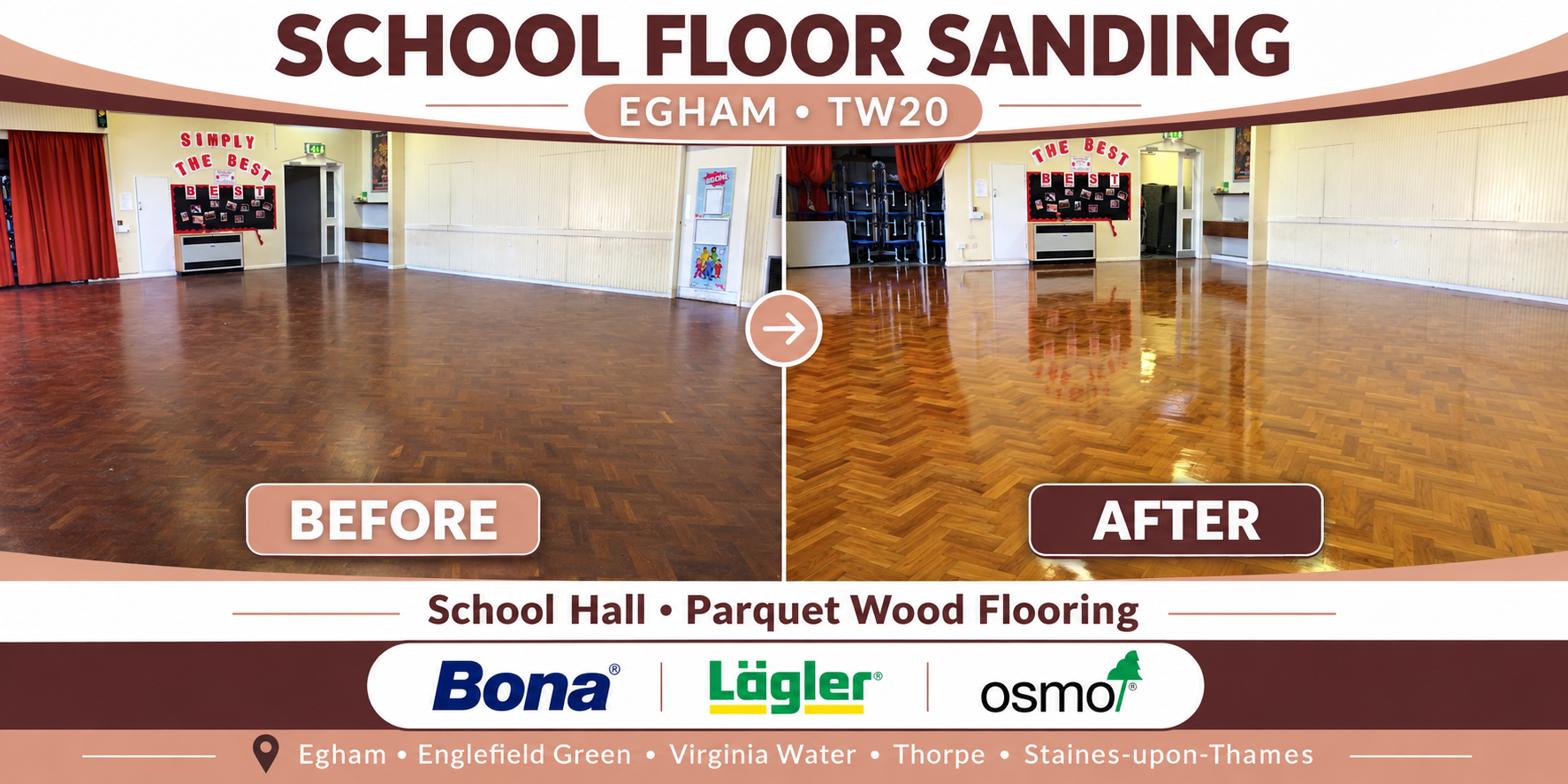
School floor sanding transformation in Egham TW20 – Before and after professional parquet floor restoration in a school assembly hall, serving Egham, Englefield Green, Virginia Water, Thorpe and Staines-upon-Thames.
Wooden Floor Restoration for Schools, Nurseries and Educational Buildings
Educational buildings place quite different demands on timber floors. Nursery playrooms suffer concentrated wear from furniture, spills and constant cleaning, while secondary school corridors take a steady pounding from shoes, bags and movement between lessons. Sports halls, assembly rooms and teaching spaces require their own assessment of surface grip, abrasion resistance and maintenance needs.
We undertake and assess projects for nurseries, preschools, Montessori settings, childcare centres, primary and secondary schools, independent and boarding schools, academies, colleges, sixth-form facilities and specialist education premises. The same planning principles apply to music schools, dance and sports academies, university teaching rooms, adult learning centres and after-school clubs, although the coating specification must suit each room’s actual use.
A classroom floor that regularly accommodates wheeled tables needs a different maintenance strategy from a timber stage or a barefoot activity room. Getting that decision right at the beginning saves unnecessary sanding and reduces premature finish failure.
Understanding Older School Floors Around Egham TW20
Egham has a mixture of older institutional buildings, Victorian and Edwardian properties, later school extensions and modern educational facilities. Around Egham High Street, Station Road, Church Road and the surrounding residential streets, timber floors can sit over traditional suspended joists, while newer classrooms may have parquet or engineered flooring bonded to screed.
Englefield Green and the area around Royal Holloway, University of London, also contain period architecture and educational buildings where timber floors need careful treatment. Older construction can mean irregular joist movement, historic repairs and finishes that cannot safely be identified by appearance alone.
Traditional quartersawn oak blocks, pitch pine boards and occasional teak flooring behave differently under sanding machines and coatings. Pitch pine can release resin, oak contains tannins that may react with unsuitable primers, and dense oily timbers such as teak require particular attention to coating adhesion.
School Flooring Challenges: Structural Wear, Hygiene and Slip Resistance
Domestic floor sanding methods are not automatically suitable for an occupied educational building. School timber flooring often has decades of embedded cleaning residues, movement at board joints and concentrated traffic lanes that require considerably more preparation than a typical living room.
Applying an off-the-shelf polish over failing lacquer may briefly improve its appearance, but it will not repair loose parquet, stabilise damaged boards or restore the bond between an old coating and the timber. Silicone-containing maintenance products can also contaminate the surface and interfere with later refinishing.
During an initial inspection, we look for the following problems:
- Open joints and dirt traps: Gaps between floorboards or parquet blocks can collect dust, food debris and moisture, making cleaning more difficult in nurseries and classrooms.
- Loose or rocking parquet: Failed adhesive beneath timber blocks can create movement, uneven edges and localised trip hazards.
- Worn protective lacquer: Once traffic removes the finish, exposed timber absorbs dirt and moisture more readily and becomes harder to sanitise.
- Uncertain slip resistance: Cleaning residues, unsuitable polish and contaminated finishes can affect grip, particularly around entrances and circulation routes.
- Moisture ingress: Wet cleaning, leaks, condensation and damp substrates may cause cupping, swelling or adhesive failure.
- Splinters and raised fixings: Damaged pitch pine boards, exposed nail heads and uneven repairs require attention before sanding.
- Inappropriate previous coatings: Old waxes, oils, paints and incompatible lacquers may cause adhesion problems when applying a modern finishing system.
We also consider previous floor treatments and the age of the building. Where old coatings or concealed materials could contain hazardous substances, suitable identification and controls are required before disturbance. Suspected asbestos-containing materials are not treated as ordinary sanding waste.
Our Five-Step Commercial School Floor Sanding Process
A successful school flooring project starts with investigation rather than switching on a sanding machine. The objective is to remove the minimum necessary timber, correct underlying defects and produce a surface that can withstand the next term’s use.
Step 1: Subfloor Audit, Timber Identification and Moisture Testing
We begin by checking timber thickness, historic sanding depth, loose fixings, board movement and the condition of the underlying structure. Solid boards and traditional parquet can often be restored several times, but thin engineered flooring may have insufficient wear layer for another full sanding.
Moisture readings help determine whether it is sensible to proceed. We use appropriate timber moisture meters and, where a concrete or screeded substrate is involved, assess relative humidity using suitable calibrated hygrometer methods, with reference to BS 8201 and the flooring system’s requirements.
There is little point re-bonding parquet over a damp screed. If readings indicate excessive moisture, the cause must be investigated and corrected before repairs or coatings begin.
The survey also establishes access routes, room dimensions, available power, furniture clearance and any safeguarding or site-specific requirements. These details feed directly into the quotation and proposed programme.
Step 2: Timber Repairs, Re-bonding and Resin Gap-Filling
Loose parquet blocks are lifted carefully where practicable, the old adhesive is assessed and unsuitable residue removed. For appropriate substrates, a compatible silane-based flexible parquet adhesive can provide a durable bond while accommodating limited timber movement. Adhesive selection depends on the block dimensions, substrate condition and manufacturer specification.
Damaged floorboards may require securing, localised replacement or repairs using matching reclaimed timber. With older pitch pine and oak floors, we pay particular attention to the board profile and grain direction so replacement sections do not stand proud after sanding.
Small, stable gaps can sometimes be treated using fine sanding dust mixed with a compatible resin binder to form a resin-slurry filler. Larger moving joints should not simply be packed with rigid filler, which is likely to crack or break away as the timber expands and contracts.
For wider defects, timber slivers, replacement blocks or another suitable joint treatment may be more reliable. The repair method must accommodate the floor’s construction rather than merely hide the gap on completion day.
Step 3: HEPA Dust-Controlled Sanding and Surface Preparation
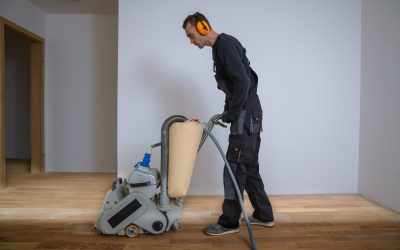
For substantial timber areas, professional belt sanding equipment such as the Lägler Hummel is suited to removing deteriorated coatings and levelling moderate surface irregularities. Edge sanders and detailed finishing equipment are then used around skirting boards, thresholds, radiator positions and fixed joinery.
Grit progression is selected according to the species and condition of the timber. A badly coated pitch pine floor may need an initial coarse cut before intermediate and fine sanding, while sound oak parquet may require a less aggressive starting grit.
Commercial dust control is particularly important in schools. Where specified, compatible extraction equipment incorporating HEPA H14 final filtration provides high-efficiency fine-dust capture, supported by local containment, suitable vacuuming and appropriate respiratory protection during higher-risk tasks.
No sanding system should be described as completely dust-free. We reduce airborne dust at source, isolate the work area and clean adjacent thresholds before handing the space back to the premises team.
Before sealing, we inspect for scratches, machine marks, remaining adhesive and contamination. A finish will not disguise poor preparation; it usually makes those defects more noticeable under classroom lighting.
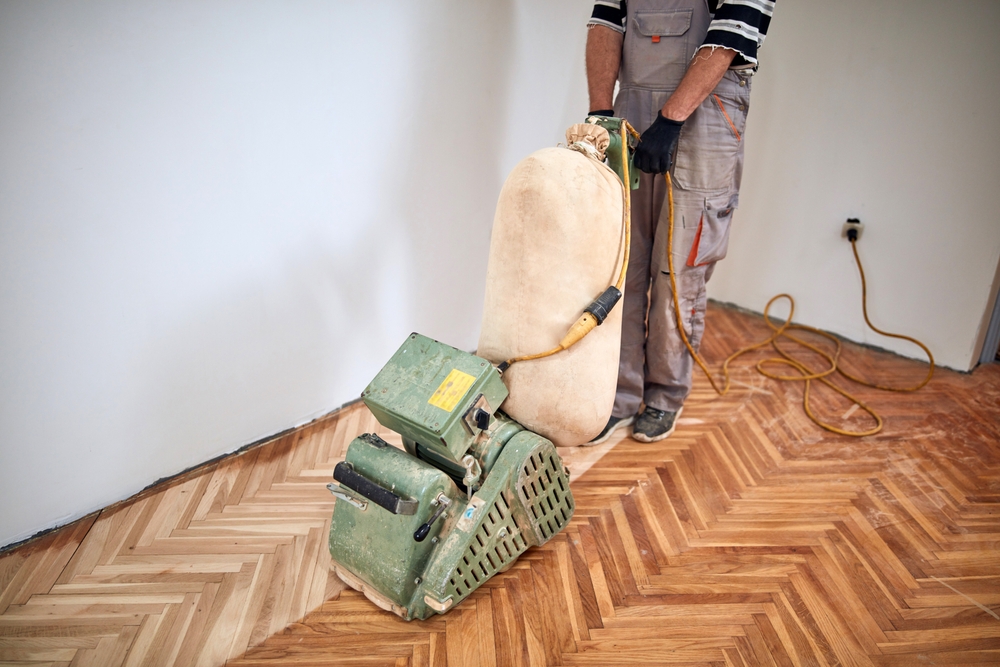
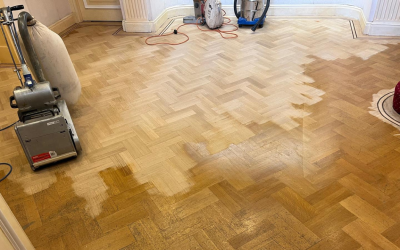
Professional herringbone parquet floor sanding and restoration in Egham TW20, removing worn finishes and preparing wooden floors for a smooth, durable protective coating.
Step 4: High-Traffic Finishes, 2K Lacquers and Anti-Slip Options
Finish selection is one of the most important decisions on a school floor. A corridor used by hundreds of pupils each day needs a coating with suitable abrasion and chemical resistance, while a nursery activity room may place greater emphasis on cleaning compatibility, low odour and surface grip.
Two-Component Waterborne Polyurethane Lacquers
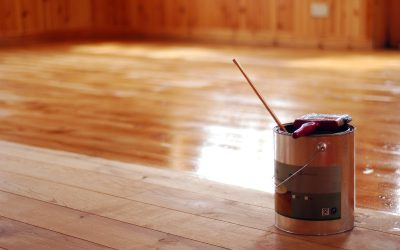
For many high-traffic educational interiors, a commercial 2K waterborne polyurethane lacquer is a practical specification. These systems use a separate cross-linking hardener or catalyst to develop a tougher coating network than a conventional single-component finish.
Products such as Bona Traffic HD are designed for heavily used timber floors and provide documented technical information on drying, durability and application. We check the current technical data sheet, substrate preparation requirements, mixing ratio and working time before specifying any coating.
Correct catalyst dosing matters. Incorrect mixing can compromise film development, while exceeding the product’s pot life may result in application and performance problems even if the material initially appears workable.
For education premises, low-emission documentation is also relevant. We review available VOC information and recognised emissions classifications, including EMICODE EC1 Plus where a particular product has that certification, rather than assuming every waterborne lacquer meets the same standard.
Hardwax Oils for Suitable Teaching Spaces
Hardwax oils can be suitable where the timber’s natural appearance and straightforward local maintenance are priorities. They are not interchangeable with a fully sealed commercial polyurethane system, and the maintenance regime must be understood before choosing one.
For example, Osmo Polyx-Oil combines oils and waxes and offers a repairable finish for appropriate timber flooring. In schools, its suitability depends on the particular room, cleaning products, anticipated traffic and the manufacturer’s current instructions.
Slip Resistance and Pendulum Testing
Slip resistance needs particular attention at entrance halls, circulation routes and activity spaces. The older BS 7976-2 pendulum methodology is still referenced in existing specifications, but BS EN 16165:2021 Annex C is the current UK standard for pendulum assessment.
Health and Safety Executive guidance generally classifies a pendulum test value of 36 or above as low slip potential under the tested conditions. The appropriate slider, dry or wet testing conditions and actual use of the room must be considered when interpreting results.
Where a documented slip-performance requirement applies, we can discuss suitable anti-slip coating systems and independent in-situ pendulum testing. A manufacturer’s product rating alone should not be taken as proof of the finished floor’s installed performance.
Step 5: Final Inspection, Aftercare and School Floor Maintenance
After the final coat, we check the finished surface for coverage, visible defects, contamination and properly completed repairs. The premises manager should receive clear guidance on access restrictions, cleaning methods and when furniture can be returned.
Routine maintenance matters just as much as the initial refinishing. Abrasive dirt carried in from playgrounds and car parks acts like sandpaper under thousands of shoes, particularly through the winter months.
A sensible maintenance plan normally includes effective entrance matting, regular dust removal, damp rather than saturated cleaning and manufacturer-approved neutral cleaning products. Aggressive chemicals, steam cleaning and excessive standing water should be avoided unless explicitly permitted by the finish manufacturer.
We can also assess worn traffic lanes for a maintenance recoat before the protective film wears through to bare timber. That can avoid the cost and disruption of another full sanding programme.
School Holiday, Weekend and Overnight Floor Sanding in Egham
The difficult part of a school flooring contract is often the programme rather than the sanding itself. Teaching spaces need to be available at agreed times, furniture must be moved safely and the finished coating needs sufficient drying and curing time before normal use resumes.
We plan work around half-term breaks, Easter, summer holidays, inset days and suitable out-of-hours periods. Where premises remain active, sectional working and secure segregation can allow other parts of the building to operate without unnecessary interference.
| Working Shift | Operational Benefits | Suitable Facilities |
|---|---|---|
| Overnight Working | Reduces disruption to daytime activities where noise restrictions, ventilation and coating cure times permit. | College corridors, university facilities, administration rooms and selected teaching spaces. |
| Weekend Phased Working | Provides an extended closure window for sanding, repairs, coating and initial drying. | Primary schools, academies, tuition centres and independent schools. |
| Sectional Working | Allows agreed rooms or floor zones to be isolated and completed in sequence. | Nurseries, boarding schools, colleges, larger campuses and active education centres. |
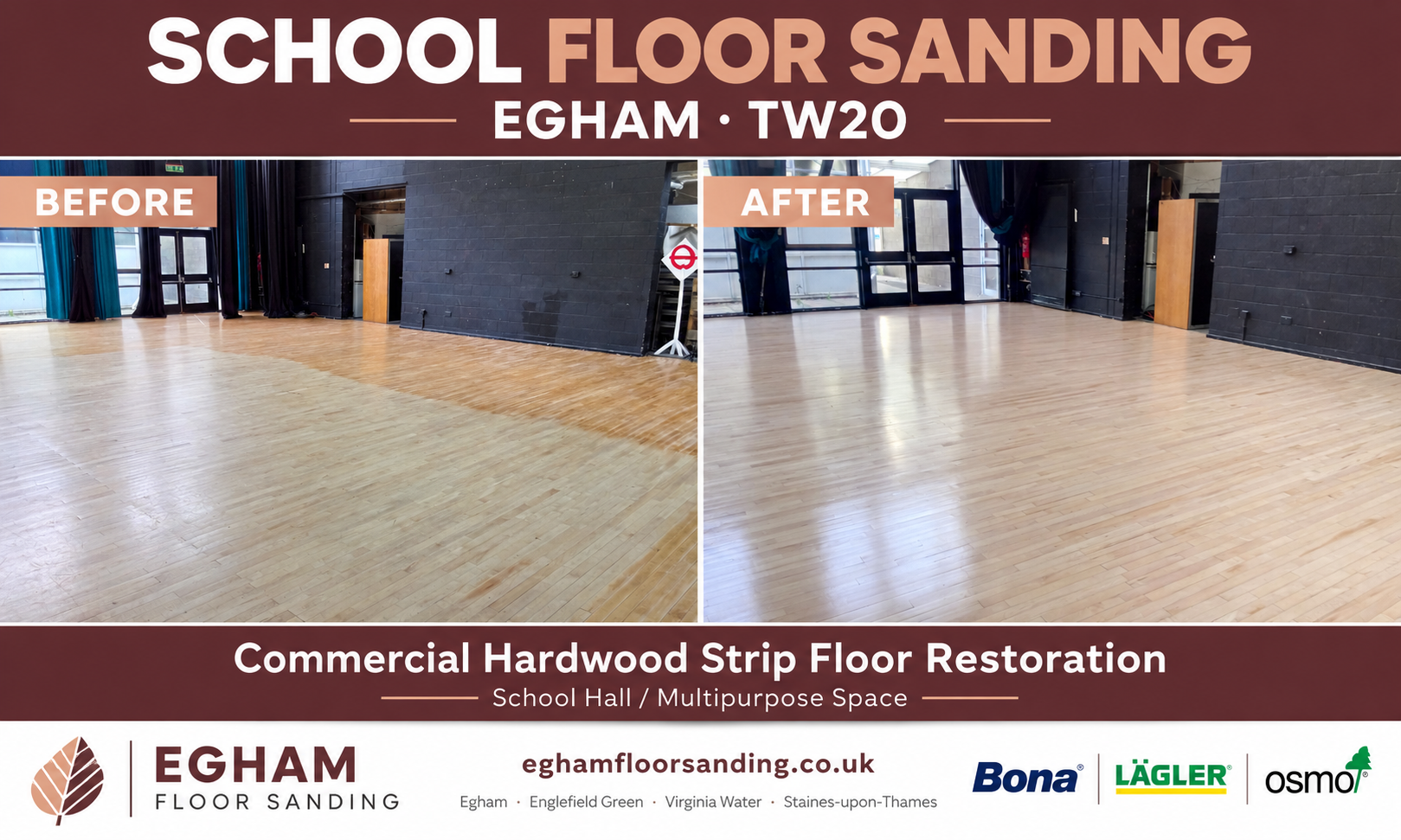
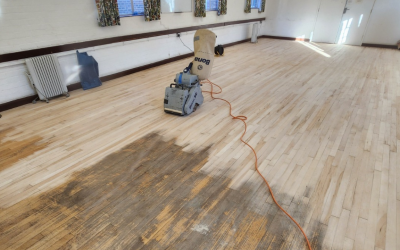
School Floor Sanding Egham TW20 – Before and after hardwood floor restoration in a school hall, showcasing professional sanding and refinishing by Egham Floor Sanding.
Drying Time Is Not the Same as Full Cure
Some commercial 2K waterborne lacquers permit light access within several hours, while particular fast-curing systems may allow normal foot traffic after approximately 12 hours under specified conditions. That does not mean the coating is immediately ready for heavy furniture, wet cleaning or concentrated mechanical loading.
Temperature, relative humidity, ventilation, coat thickness and the chosen product all affect the return-to-service programme. We use the applicable technical data sheet to establish safe access periods and allow additional time where site conditions require it.
Hardwax oils have different drying and curing characteristics. For a nursery, we would rather agree a realistic reopening date than risk children and staff returning to a coating that has not developed the required resistance.
Safeguarding, Site Access and Health and Safety Documentation
Educational projects require more than a standard domestic method statement. The site plan should address controlled contractor access, safeguarding arrangements, fire exits, noisy operations, cable management, dust containment and storage of chemicals and equipment.
We discuss site-specific Risk Assessments and Method Statements (RAMS), COSHH assessments and Safety Data Sheets for the proposed products. The required DBS checks, supervision arrangements, induction procedures and permits are agreed with the school before work starts.
Potentially hazardous areas are kept segregated, and sanding dust is removed and disposed of through appropriate arrangements. Fire precautions are also necessary around combustible wood dust, finishing materials and any oil-contaminated applicators.
Restoring Parquet, Pine and Hardwood Floors in Egham Schools
Parquet Flooring in Classrooms and Assembly Halls
Traditional herringbone parquet can remain serviceable for decades, provided loose blocks are secured and enough wear thickness remains above the tongue and groove. We check whether the original adhesive is stable and whether individual blocks have been damaged by moisture or previous repairs.
Parquet must be sanded with an appropriate technique to avoid visible directional scratches across the grain. Localised re-bonding and correctly matched replacements are often more economical than lifting a complete floor.
Pitch Pine and Original School Floorboards
Older school buildings sometimes contain pitch pine boards with a characteristic warm colour and pronounced grain. These floors can be durable, but old nails, resin-rich patches and movement around joists require particular care.
We assess exposed fixings, worn board edges and the remaining timber thickness before removing historic coatings. Excessively aggressive sanding can shorten a traditional floor’s service life without improving its structural condition.
Oak Floors in Teaching, Music and Performance Rooms
Oak is widely valued for its wear resistance, but the finishing system still needs to suit the application. Tannin reactions, contamination from previous treatments and inconsistent repairs can cause discolouration or uneven coating adhesion.
Music rooms, performance areas and dance spaces also need specific consideration of acoustic requirements, floor movement, grip and activity type. Where a floor forms part of a sprung sports or performance system, we assess its specialist requirements before recommending sanding or refinishing.
How Much Does School Floor Sanding Cost in Egham?
Commercial school floor sanding is normally priced after assessing the floor area, timber condition, repair requirements and finishing specification. A straightforward classroom with sound boards is a different proposition from an assembly hall containing loose parquet, damaged thresholds and several generations of old coating.
Other cost factors include furniture removal, restricted access, specialist slip-resistant finishes, phased working and the number of coats required. Overnight or weekend programmes may also affect labour and site-management costs.
Our floor sanding prices page provides a starting point for understanding standard sanding, sealing and repair costs. Educational and larger commercial projects are quoted against the actual scope, with additional repairs and optional finishes identified before work is agreed.
When preparing a quotation, we aim to distinguish essential repairs from cosmetic improvements. That gives school business managers and estates teams a clearer basis for comparing specifications and allocating maintenance budgets.
Why Speak to Egham Floor Sanding About Your School Floors?
Our business has been established since 1996, with floor sanding and timber restoration services offered for domestic and commercial premises. We understand that a school project needs a clear specification, practical access arrangements and a finish that can be properly maintained.
Before a commercial appointment, ask us to confirm the personnel allocated to the work, relevant CSCS cards where required, insurance cover and the supporting health and safety documentation. Site-specific accreditation and insurance details should be established as part of contractor approval rather than assumed from a general quotation.
A Straightforward Assessment and Quotation Process
- Initial discussion: Tell us the school type, approximate floor area, timber condition and intended works window.
- Photo or video review: Send photographs of worn areas, loose blocks, entrances and any known moisture problems for an initial assessment.
- Physical site survey: Where necessary, arrange an inspection to assess construction, moisture, access and repair requirements.
- Written quotation: Receive an itemised scope covering preparation, repairs, sanding, finishing and any agreed additional works.
- Programme agreement: Confirm working hours, room handovers, safeguarding arrangements and return-to-service conditions.
You can also visit our wood floor sanding gallery to see examples of timber restoration finishes. For a school project, we recommend considering the technical specification alongside the appearance of the completed floor.
School Floor Sanding Across Egham TW20 and Nearby Areas
We handle enquiries from educational premises in Egham town centre, Englefield Green, Egham Hythe and the surrounding locality. Nearby areas include Thorpe, Virginia Water, Staines-upon-Thames, Wraysbury and other parts of the Surrey and Berkshire border.
Whether your premises are close to Egham High Street, Egham railway station, Royal Holloway or the roads leading towards the A30 and M25, access and delivery arrangements can be factored into the work programme.
For older buildings, including Victorian conversions and Edwardian institutional blocks, we also consider the implications of historic floor construction and any relevant listed-building or conservation restrictions before recommending significant alterations.
Frequently Asked Questions About School Floor Sanding
Can a school hall be sanded during the summer holidays?
Yes. Summer holidays are often the most practical period because they provide time for repairs, sanding, coating and full curing before furniture and daily foot traffic return. The required duration depends on the area, floor condition and selected finishing system.
Can classrooms remain in use while another area is being restored?
Potentially, provided the work area can be safely segregated and ventilation, noise, safeguarding and access arrangements are suitable. Sectional works must be agreed with the premises manager and supported by a site-specific risk assessment.
Is waterborne lacquer suitable for nurseries?
A suitably specified low-emission waterborne finish can be appropriate for nursery flooring after the required drying and curing period. We assess the manufacturer’s emissions documentation, cleaning compatibility and anticipated use rather than relying on a general description such as child-safe.
Can loose parquet be repaired without replacing the whole floor?
Often it can. Where the timber blocks are sound and the substrate is suitable, individual blocks can be lifted, cleaned and re-bonded using a compatible adhesive. Widespread moisture damage or substrate failure may require more extensive repairs.
How often should school timber floors be refinished?
There is no fixed interval. Wear depends on pupil numbers, room use, entrance matting, cleaning practices and the original coating specification. Regular inspections and timely maintenance recoating can considerably reduce the need for full sanding.
Do school floors need slip-resistance testing?
The need for testing depends on the school’s risk assessment, intended use and applicable specification. For high-risk areas or where documented performance is required, competent pendulum testing can provide useful evidence of actual surface grip under defined conditions.